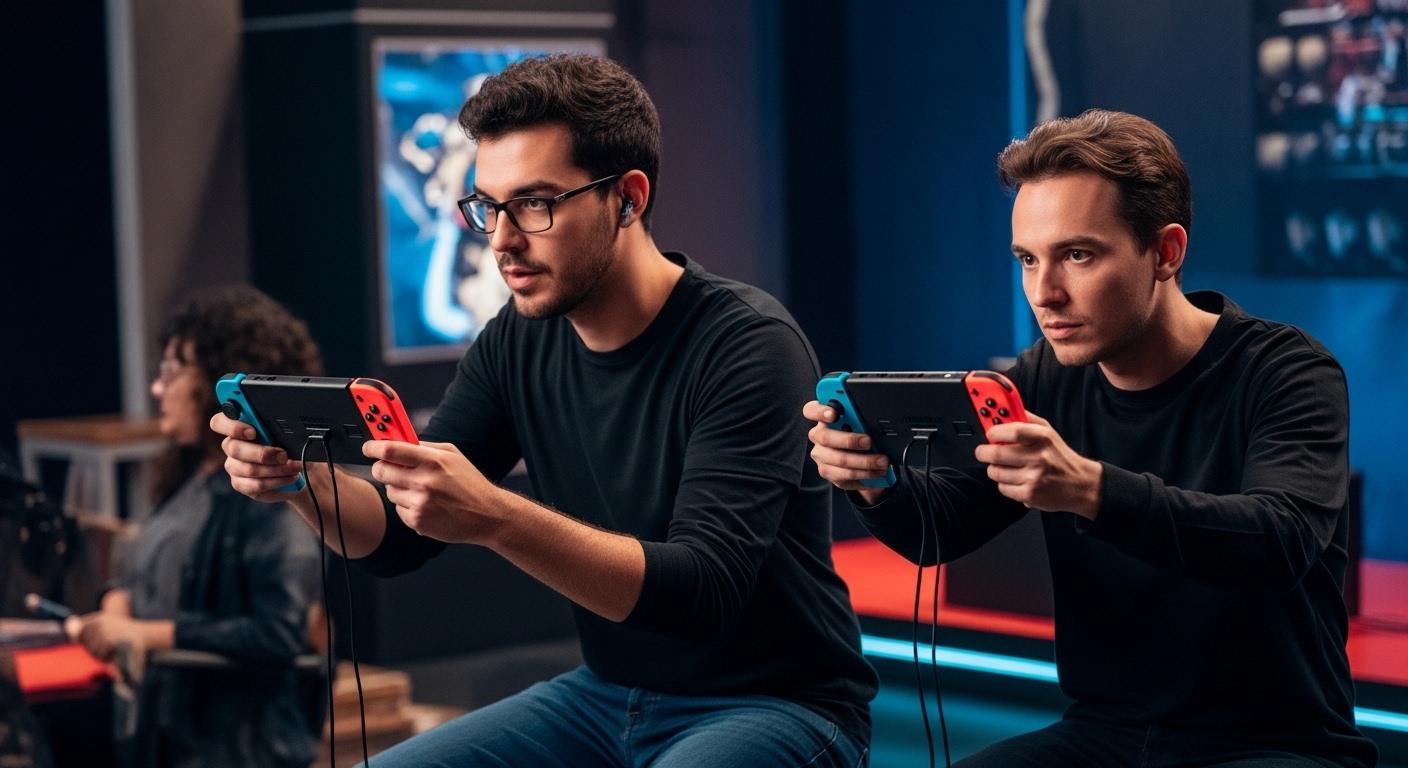
Brazilian consumer shopping for Nintendo Switch on Amazon Brazil with Pix payment discount
Updated: March 16, 2026
The amazon Nintendo Switch Brazil pricing moves are shaping how Brazilian players access Nintendo’s ecosystem, with exclusive coupons and Pix-based payment incentives turning price into a competitive differentiator for both buyers and sellers.
Market Dynamics in Brazil: Price Signals and Consumer Access
Brazil’s consumer electronics market has long balanced between import-led price pressures and domestic retail promotions. When online marketplaces like Amazon Brazil experiment with exclusive coupons and payment methods tied to popular local rails, price signals become a proxy for value rather than merely a sticker on a box. In practice, a discount tied to Pix—Brazil’s instant payment rails—can compress the effective cost of entry for new players and shorten the window between a consumer’s curiosity and a purchase. The dynamic is not just about the headline price; it’s about the ease of checkout, the speed of delivery, and the perceived reliability of warranty and service in a market where post-purchase friction is a major deterrent.
This environment incentivizes retailers to calibrate stock and promotions around pay-and-go behaviors that are culturally salient in Brazil. It also raises the potential for price segmentation, where bundles featuring the Switch hardware, a game, and a Pix-friendly coupon outperform standalone consoles on a price-per-use basis. For Brazilian consumers, the decision calculus shifts from “can I afford this now?” to “is this the best financial move given my payment options and after-sales assurances?”
Amazon’s Position in the Switch Ecosystem
Across regions, Amazon’s marketplace acts as a barometer for demand and a channel for price experimentation. In Brazil, where logistics and warranty complexity often influence purchasing decisions, exclusive coupons and payment-method incentives can tilt the balance toward Amazon even when local retailers carry similar stock. The reported scenario—where a Switch successor receives a reduced price on Amazon with a Pix-exclusive coupon—illustrates how digital platforms can set the pace for pricing narratives, while physical retail still competes on in-store experience, immediate gratification, and localized support networks.
From a strategic vantage point, Amazon’s promotions may accelerate the market’s migration from impulse buys to planned acquisitions. Consumers who previously waited for seasonal sales may instead time their purchases around Pix-cleared promotions and coupon windows, especially when bundled with accessories or digital credit that improves perceived value. For Nintendo and its Brazilian partners, the outcome depends on sustaining product availability and ensuring that warranty channels remain clear and navigable for a market where cross-border service disputes are a known risk.
Consumer Behavior and Payment Innovation
Pix has become more than a payment method; it is a behavioral amplifier. When promotions are tied to Pix clearance, shoppers experience faster validation and faster value realization, reinforcing the habit of purchasing within the same ecosystem. This dynamic can alter long-standing consumer expectations around timing—consumers may accept slightly higher base prices if the total cost of ownership, including financing and promotions, is demonstrably lower through Pix-enabled discounts.
Practically, Brazilian buyers may favor bundles that lock in price protection across a few months, particularly when the included game library expands the console’s utility. Retailers and platform owners should monitor the elasticity of demand in response to coupon frequency, the cadence of price drops, and the reliability of shipping and after-sales support. In a market where gray-market perceptions persist, a transparent price pathway on trusted platforms becomes a key loyalty driver for families and enthusiasts alike.
Policy Frictions and Long-Term Implications
Despite the optimism around discounts and rapid payments, structural factors continue to constrain price normalization. Import taxes, currency volatility, and warranty logistics can create ceiling effects that make sustained price reductions challenging. For Nintendo, a long-term Brazilian strategy may involve a mix of official regional stock, clearer regional warranty terms, and localized marketing that emphasizes the value of long-term ownership—especially as new hardware iterations approach. For consumers, the trajectory suggests a market where timing, platform integrity, and predictable service beat short-lived price dips. The result could be a more discerning buyer base that values clarity on returns and after-sales service as highly as headline discounts.
Actionable Takeaways
- Monitor Pix-based promotions on Amazon Brazil for sustained price-value tradeoffs rather than one-off discounts.
- Evaluate bundles that include accessories and digital credit to maximize total cost savings over the life of the console.
- Check warranty terms and verify local service options before committing to cross-border purchases or bundles from online platforms.
- Track price trajectories across multiple retailers to identify genuine value rather than marketing-driven dips.
- Leverage official regional promotions to ensure faster delivery and reliable post-purchase support.
- Consider the timing of a Switch successor release in relation to budget cycles and school-year buying patterns in Brazil.
Source Context
Context for the pricing dynamics and coupon strategies discussed above can be seen in recent reporting on Amazon’s exclusive discounts tied to Pix and promotions around Nintendo hardware in Brazil.